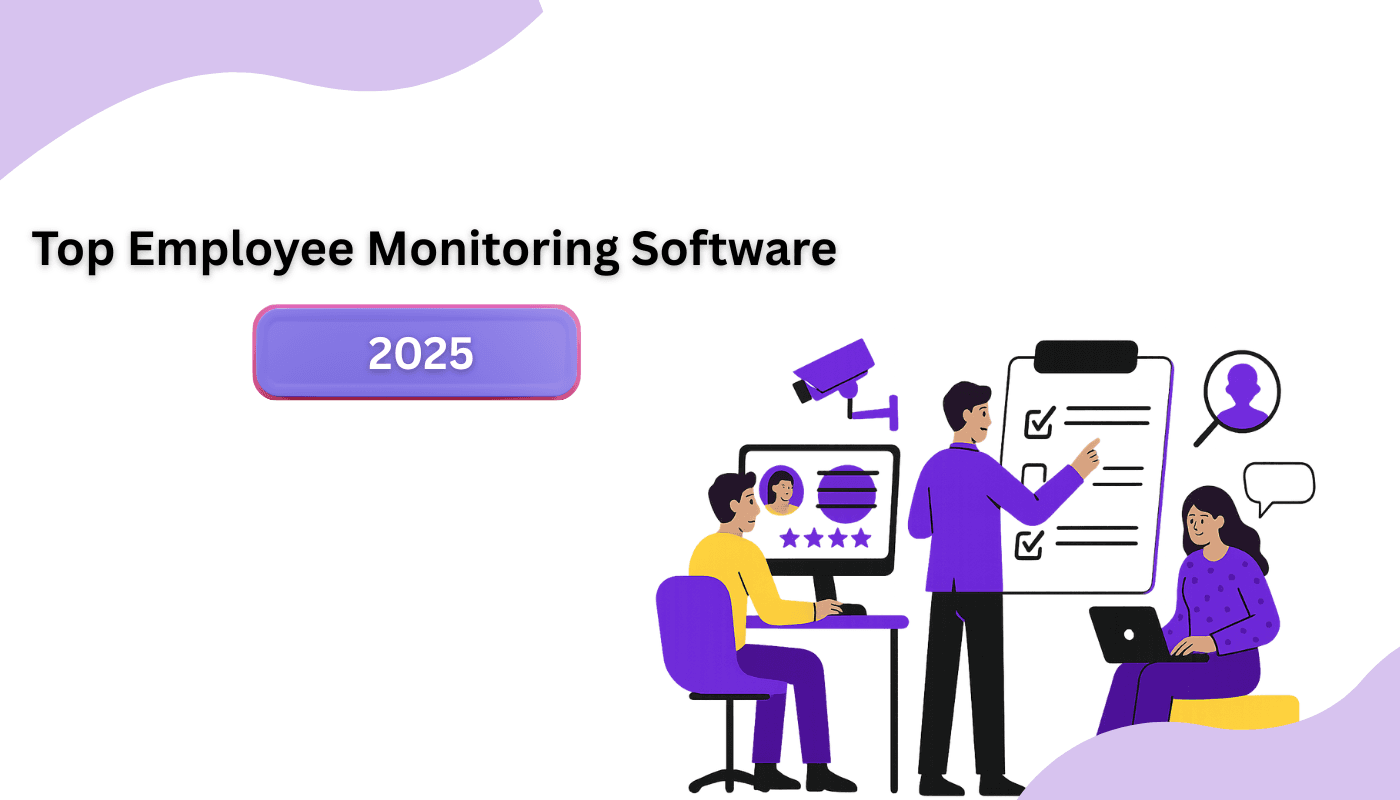
Top Employee Monitoring Software Picks for 2025
Introduction
As we slowly transition into the future of work, where technology is playing a pivotal role in almost every aspect of an employee's life, and hybrid and remote working has become the norm, businesses are grappling with new challenges. These hurdles can be in terms of assessing the productivity of employees, and their attendance, maintaining accountability, and safeguarding sensitive data across decentralized teams. This is where employee monitoring software comes into the picture, this software helps companies to provide transparency, increase efficiency, and strengthen the security of their workforce.
The Rise of Employee Monitoring Software
Organizations these days understand that employee monitoring is no longer restricted to tracking time or logging activities of the employees, these employee activity monitoring software can be used to gain deeper insights into employee performances, identify gaps, and increase engagement.
“According to a research, employee productivity is expected to increase by 7% when they are monitored.”
The employee monitoring software market was valued at $627 million in 2023 and is expected to reach an astounding amount of $1,729.34 million by the year 2031, the growth of the market is projected at a CAGR of 11.10% between 2024 to 2031. However, these monitoring software have also sparked some discussion around privacy and ethics. Therefore it is important for the organizations to implement them thoughtfully and transparently. In this article, we will explore the features of these software, its benefits, and some of the legal and ethical considerations around them.
What is Employee Monitoring Software?
One of the primary challenges that employers currently face is how to keep their employees engaged at work. According to a study, 92% of employees and managers feel workplace distraction is a major concern. A company has to face major losses if they are unable to reduce this distraction, reports suggest that businesses in America are prone to losing up to $650 billion per year because of employees being distracted during office hours. This is where employee monitoring systems can be used, they are basically tools that are used by employers in order to collect different forms of information about the employees while ensuring complete privacy.
The data collected can be used by employers to monitor their productivity, increase engagement, and improve workflows. The data collected can range from - time spent on both productive and unproductive tasks, records of application usage, periodic screen recordings of the screen, tracks emails and other communications, etc. This data can also be used by the employer to identify and analyze different trends, patterns, and correlations among the employees, which allows the company to gain insights into different business processes.
Types of Employee Monitoring Software
This softwares can be used for different purposes, the different types of employee monitoring software are as follows:
Employee Activity Monitoring Software: These kinds of software are used in order to track the activities of the employees, for both in-office and remote teams. These software are capable of keeping track of the work hours along with the logs of employee activities (app or website visits). Therefore they can be used to analyze the productivity of the employees. These tools are there to help employers to identify idle time, optimize workflow, and encourage self-accountability for the employees.
Video surveillance: This is one of the widely used methods, and it involves the use of video cameras (like CCTV) to oversee workplace activities. This software not only helps the employees to track employee activities, but also prevents any form of misconduct. The footage is stored and hence can be used in case of any form of investigation, performance review or any other form of future reference.
Network and email monitoring: Employees are often working with sensitive data of the company therefore it is important to keep a track of how these data are being used by them. These forms of softwares are used to keep a track of the network traffic, what files are downloaded or shared. They can also be used to scan external emails in order to reduce the chances of scams, phishing or any form of data leaks.
Keylogging: This kind of employee monitoring tracks the keys that are being pressed by the user on the keyboard. This sort of software is also capable of capturing screenshots, when they are triggered by predefined keywords or commands. They help in reducing any form of unauthorized access by the employees or any attempts to share sensitive information.
Benefits of Using Employee Monitoring Software
Implementing an employee monitoring system not only provides invaluable insights about the activity of the employee during working hours but can also be used for other activities. Some of the advantages of using an employee monitoring software are as follows:
Increased productivity: One of the key benefits of using this software is that it can be used to collect data needed to calculate and improve employee productivity. According to a Clockify report, employees only spend an average of 12 minutes before they get distracted. The employee monitoring systems can be used to identify potential distractions, and unproductive workflows, and also identify unengaged employees. Once these employees are identified the employer can develop a plan of action to improve engagement. This can be achieved through customized training, setting realistic performance expectations or simply by offering incentives to increase productivity and focus.
Better time management: Employee monitoring software also helps organizations manage their time better. This software can be used to effectively track working hours, reducing the risk of any manual errors. They can also be used to keep track of employee attendance with various features like clock-in/clock-out or biometric authentication. They also help the company in the optimum utilization of resources, by identifying time-consuming activities or any bottlenecks that exist.
Enhanced security and compliance: One of the major concerns of any organization is the leaking of sensitive or private information of the organization. By using employee monitoring software, these organizations can identify any form of suspicious activities or patterns, among their employees, that may indicate insider threats. On top of this, there are different forms of rules and regulations that certain forms of organizations have to adhere to, for example, industries such as finance, healthcare, and banking have to adhere to strict regulations with respect to data protection, operational procedures, and privacy. Employee monitoring systems can be used to track employee activities to make sure all processes are performed as per the standards.
Remote workforce management: Ever since the COVID-19 pandemic, remote working has become increasingly popular among employers as well as employees. This means of working is not only cost-effective for employers but also allows employees to have a decent work-life balance. Monitoring the activities of the employees can help the company to make sure that they are engaged, productive, and following the policies of the organization.
Key Features to Look for in Employee Monitoring Software
Some of the key features of an employee monitoring software are as follows:
Real-time tracking: One of the primary features of an employee monitoring system is real-time tracking, which provides live updates about employee activities which in turn can be used to enhance productivity. This particular feature helps the managers to monitor different tasks, applications, or websites that are being used by the employee at the moment. This feature ensures that the employees stay focused, and if needed it can also be used to provide any form of feedback or assistance.
Time tracking and attendance: According to the American Payroll Association, manual time tracking is prone to more errors and can cost companies 7% of their total payroll every year. Therefore most of companies nowadays prefer using employee monitoring software for accurately capturing the time and attendance so that they can process the payroll more efficiently. Previously excel spreadsheets were used for tracking time, however, they required manual data entry and were extremely time-consuming, with a higher chance of inaccuracy. Now with features like clock-in/clock-out systems and biometric authentication, employers can easily manage shift timings and attendance of the employees.
Screen Recording & Keystroke Logging: When it comes to providing detailed insights into the activities of the employees in order to identify any form of inefficiency or any potential security threat, screen recording and keystroke logging can be very useful. The screen recording function can be used to capture occasional screenshots or live feeds of the screen of the employees, whereas keystroke logging is meant to capture everything that the employee types on the keyboard.
AI-powered insights: Some of the employee monitoring software are capable of going beyond mere data collection on the employees and providing a more detailed and nuanced assessment of their productivity and engagement. By using different portions of the data collected, like applications used, websites visited and tasks completed, these AI-powered tools can identify patterns and give a complete view of the actual workday of the employee. AI can be used to identify any form of unusual activity or loss of focus, and on that basis can be used to give productivity scores to the employees.
Cloud-Based vs. Self-Hosted: While choosing the employee monitoring software for your organization it is essential to consider what would be the best fit, a cloud-based or self-hosted solution. When it comes to cloud-based solutions, they can be accessed from anywhere using the internet, which makes them ideal for remote teams. These software are highly scalable in nature and can be adjusted to support the growing needs of the organization. They are also cost-effective in nature as they work on a subscription model, and the responsibility of maintenance is on the service provider. On the other hand, self-hosted software is costlier as it requires the upfront cost of hardware installations and a dedicated IT team for maintenance. However, they offer more control and customization as they are hosted on the company’s server.
Top 3 Employee Monitoring Software in 2025
Below is a list of some of the top employee monitoring software that can help an organization gain insights on what their employees are working on and when they are working on it. These are as follows:
InterGuard Employee Monitoring Software: InGuard offers a comprehensive employee monitoring system that has been designed to improve productivity, enhance security, and efficiently manage remote workforces. They offer a wide range of features including time tracking, video playback, and real-time alerts for suspicious behaviors or unauthorized access among others. Their software can also be used to track the online activities of the employees, the websites they visit, or the files they download. These software are in compliance with the regulations of the industry and other regulations like HIPAA and PCI.
Hubstaff employee monitoring software: Hubstaff is known for providing versatile employee monitoring software that can be used to effectively track the time and productivity of employees. This software is very popular among organizations to track and manage their remote teams. By using features like app tracking and URL usage they can track how much time is spent by the employee on each website. They also provide a fully customizable dashboard that allows employers to drag and drop widgets like activity, hours worked, PTO, etc for each member of the team. This feature provides real-time insights and can be used for making data-driven decisions.
Teramind employee monitoring software: Teramind is also very popular in providing employee monitoring solutions, which are specifically designed for larger organizations with complex security needs. They offer various forms of advanced monitoring features that can help in enhancing productivity and prevent data breaches. Teramind’s employee monitoring software is focused on improving the employee experience, they do this by performing employee sentiment analysis through a wide range of functions like - triggered screen recordings, online meeting monitoring, optical character recognition, and keylogging among others. Its AI-powered alert system, named OMNI, is designed to show employers more of what is relevant and less of what is not.
Legal & Ethical Considerations
While the use of employee monitoring software is increasing, there are also concerns that these tools can end up invading the privacy of the employees. This throws various questions, like should employees be monitored, and if so do they have the right to know that they are being monitored? These questions can generate a multifaceted response from both the employer’s side, as well as the employee’s side. Employers need to feel the right balance between protecting the information assets of the organization and making the employees feel alienated.
Companies must adhere to employee privacy laws in order to ensure ethical employee monitoring. In India, the Information Technology Act, of 2000, and the Digital Personal Data Protection Act, of 2023, ensure that the organizations take the consent of the employees before collecting personal data and implement various security practices to protect the said data. Employers should also follow the principle of purpose limitation, which states that data should be collected for specific and legitimate reasons only. This would ensure that the employees are not being subjected to excessive scrutiny. Some of the companies even perform a Data Protection Impact Assessment (DPIA), that helps them identify and mitigate risks associated with monitoring.
One of the simple yet effective ways of ensuring due diligence is by ensuring transparency in communication. Employers need to clearly communicate the purpose, scope, and methods of monitoring their employees. This would make the employees feel a part of the process, and they would have the right to consent to it. Regularly updating the privacy policies and providing training on data protection will further ensure compliance and ethical monitoring practices.
Conclusion
It can be said that employee monitoring software has evolved into a strong tool that can be used to increase productivity, optimize time management, and help reduce data leakages. While its benefits, ranging from increased employee engagement to safeguarding sensitive data, are undeniable, organizations must also be mindful of the ethical and legal considerations of its implementation. It is very important to strike the right balance between transparency and employee privacy in order to foster a culture of trust rather than surveillance.
As the need for employee monitoring software grows, businesses will start adopting them in greater numbers. These tools offer AI-powered insights, real-time tracking, and compliance-friendly practices that can be used to make the workplace more productive and fair. However, alongside efficiency and security, organizations must also prioritize employee well-being. A monitoring system that focuses solely on oversight can lead to stress and disengagement, whereas an approach that integrates well-being initiatives, work-life balance, and transparent communication can enhance overall workplace satisfaction.
Ultimately, when these tools are used responsibly, they empower both employers and employees to work smartly, more securely, and more efficiently while maintaining a positive and supportive work environment.