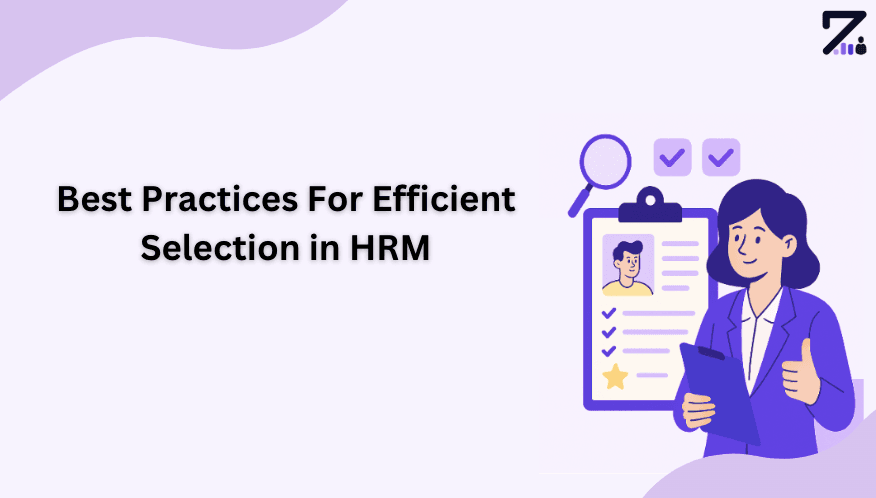
Best Practices For Efficient Selection In HRM
INTRODUCTION
As the Future of Work evolves, an organization’s success now increasingly depends on the productivity and capabilities of its workforce. Human resource management (HRM) plays a central role in ensuring this success, with the selection process being one of its most important functions.
According to a study conducted by Manpowergroup around 90% of hiring managers struggled to find the right candidate for filling vacancies.This means there is a need to streamline your hiring and come up with an effective selection process. However, effective selection is not just about filling vacancies – it is about identifying people whose skills, values and potential align with the company's goals and culture.
A well-designed selection process can increase employee performance, promote workplace harmony, and reduce turnover, all of which have a direct impact on a company's bottom line. But selecting the right candidate is no small feat. It requires a meticulous approach that combines structured methods, fairness, and technological advancements to find the most suitable candidate for the job.
In today's blog, we will explore the best practices that will keep you ahead and help you redefine the selection process easily and efficiently. So, whether you want to start afresh or you want to change and refine your current HRM strategies, you are at the right place. Follow along to learn about actionable insights that HR professionals can use to build a productive and high-performing team.
WHAT IS SELECTION IN HRM ?
Selection refers to the process of choosing the right candidate for a particular job role. The process might sound easy but there are several parameters that should be kept in mind while selecting the right candidate. In today's competitive job market a systematic and standardized process is pivotal to create a strong employer brand and retain the top candidates.
Selection in HRM does not mean assessing candidates solely on the basis of their qualifications, instead it is essential to understand if the particular candidate aligns with the organisation's value, culture, short and long term goals. Thereby, a good selection process is one that helps the Hiring manager in differentiating between suitable and unsuitable candidates easily.
IMPORTANCE OF AN EFFECTIVE SELECTION PROCESS
Have you ever wondered why some companies seem to have a better employer branding and a workforce that effortlessly drives them success? Well, the secret sauce here is surely their recruitment process. The selection strategy is formulated to not just fill the vacant positions but to build a workforce that aligns with the company’s culture and goals. Take the example of companies like Krafton or Microsoft: while they value skills, they also put equal emphasis on finding the right cultural fit for their workforce to succeed.
Reasons why building an efficient selection process is the way to go
Improves Organizational Success
A good selection process can lead to a better organisation performance. How? Well, hiring the right talent ensures you have people with the best skills, experience, mindset and goals. Thereby, having a well-sought talent ensures a high performing team that is productive, engaged and satisfied. A happy workforce is the secret behind a successful organisation.
Reduces Employee turnover
According to latest HR statistics, 38% of people leave their jobs within the first year of it. Why does it happen? Well, this means that your selection process needs some necessary tweaks. A high employee turnover will surely drain your budget and lead to more openings.
Your focus should be on hiring people not just assessing their skills and qualifications but also understanding if they are a good fit in terms of culture and long term goals. Understanding employee satisfaction and coming up with a strategy that is candidate-driven is the way to go.
Saves Costs Per Hire
The LinkedIn HR 2023 statistics reads that filling in positions takes an average of 36-42 days. While the average cost per hire is around 4700 US dollars. These statistics highlight how important it is to avoid bad hirings. Instead, working out a selection process that is holistics, standardized, and data-driven is integral in todays’ job market. A well defined selection process helps in ensuring that you are investing the right people from the start, eliminating the risk of resource drain.
So, an effective selection process is not just a basic HR function but it is the cornerstone for your organization's success.
STREAMLINING THE SELECTION PROCESS
Organisations today aren't just focused on filling in roles. Instead they are trying to find the right person. There is a need to refine outdated selection processes and come up with a strategy that is efficient and works magically.
At this stage you might ask how to streamline the selection process? Well, I have got you! The selection process is like a plan of action wherein each step brings you closer to finding the best candidate for your organisation. Let me take you through this -
1.Job Description and Job Listings
The primary step in the selection process is understanding the job role and conducting a job analysis. This entails understanding and defining the roles, responsibilities and skills. A well-outlined and lucid job description means attracting the right candidates to your talent pipeline.
2. Sourcing Candidates
Once the job analysis is done and you have curated a clear and concise Job Description, you need to post ,advertise and spread the word about this opening. Recruiters are increasingly using general and specialised platforms source candidates candidates in India. However, if you want to take your sourcing to the next level then using AI tools like Zeko Hunt can be a definite game-changer. By leveraging the platform you can attract talent for niche roles, from platforms like Linkedin, Github & others. HRs can now reduce the hiring efforts by 90% with Instant talent discovery and automated bulk reachout
AI tools help in headhunting which is different from traditional recruitment practices. It approaches candidates who are skilled and are the best in the pool.
3. Screening and Shortlisting
Now that the basics are sorted, we need to get started with the real work. Reviewing resumes and applications to see what makes the cut. But reviewing thousands of candidates manually can make the process painstakingly slow. Well, automation comes here, use tools like ATS to make this step both quick and accurate. Zeko Screen, for example, is an excellent tool that leverages advanced AI to sift through applications, identify top talent, and provide data-backed insights to help you make informed decisions.
4. Interviewing
Interviews serve as the first direct touchpoint between the hiring manager and the candidate. They provide an opportunity for both the organization and the candidate to understand and assess each other better. Asking the right mix of questions—ranging from soft skills to technical capabilities—is crucial to evaluate a candidate comprehensively. In recent times, standardizing interview questions has gained importance to eliminate bias and promote inclusivity. Building diverse teams is proven to boost productivity and creativity. Zeko Interview offers a solution to achieve this, allowing you to conduct structured interviews while utilizing AI to evaluate candidate responses objectively, reducing unconscious bias.
5. Tests and Assessments
Several roles require tests and assessments to understand the cognitive and technical capabilities of the candidates. Moreover, in this multicultural era evaluating cultural fits and personality of the candidates has also gained equal importance. These tests help in collecting clear facts and data about the candidate.
6. Verifying Information
If a candidate passes through all these checkpoints, it's time to verify all the information that he is presented with. Talk to references, confirm his qualifications to ensure that he meets all the expectations.
7. Selecting the Best Fit
Selecting the Best can no more be based on intuition. You need to provide a strong data-backed decision to ensure accuracy. So, use all the data you have collected so far to make an informed decision.
8.Extending the Offer
Now that you have the ideal candidate, it's time to seal the deal by sending the offer. Clearly state the terms of service and define KPIs, responsibilities, compensations and perks so that everyone is on the same page.
If you follow these steps the voila your selection process is now truly sorted! Implement it and see for yourself.
BEST PRACTICES IN HRM
The question of how to hire the right talent bugs every person in HR constantly. Well, let me tell you that hiring the right talent for a job role depends on two major things - job analysis and recruitment. If you have got this sorted then you are on your way to build your dream team that will bring you organisational success.
Here is a step-by-step guide that you can follow to streamline your selection process -
1. Conduct a Thorough Job Analysis
Think of job analysis as your blueprint. It’s about identifying exactly what the role requires—skills, qualifications, and responsibilities. A clear and detailed job description ensures potential candidates know what they’re signing up for, which attracts individuals who are a genuine match for the role.
Pro Tip: Include both technical skills and soft skills in your analysis. For example, a project manager might need expertise in scheduling tools and excellent communication abilities.
2. Build a Holistic Recruitment Strategy
Recruitment is no more a one-size-fits-all process. Instead, it needs to be tailored and customized according to different job roles, industries and requirements. To secure the top candidates from the pool you need to have a wide net -
Online Job Portals: Use platforms like LinkedIn, Naukri, and Internshala.
Social Media: Build a strong employer brand by using Facebook, Instagram and Linkedin. Posting content on these platforms regularly helps in engaging candidates passively.
Employee Referrals: Encourage your current team to recommend talent—they often know someone who’s a perfect fit.
AI tools : You can use multiple AI tools that can help you source top talents and headhunting. Tools like Zeko AI streamline your entire talent acquisition end-to-end from sourcing to analyzing resumes and conducting AI interviews at a cost of 2% of the candidate’s CTC.
3. Optimize Your Job Postings
Your Job Listing is like a bee hive that attracts a variety of bees to you. However it is on you to write this job description in a way that is clear, engaging and mentions all the key requirements as well as the perks. Doing this helps you reach out to the top candidates and find the right fit from a wide pool of candidates.
Pro Tip - Don't forget SEO optimizing your Job Postings. Use words like “flexible-work”, “growth opportunities” to make yourself seen.
In today's era finding the right candidate for a job role is like searching for a rare gemstone. Organisations have shifted their focus increasingly after the pandemic to building people-first organisations so that people are at the forefront. HR thereby now focuses on recruitment strategies that are candidate-driven. How to do this? Well, as mentioned before this can be done by building a strong employer brand.
A good employer brand makes a lot of difference. Talking about the company culture, perks, benefits and training and development programme informs potential hires about your people-centric policies that make you standout. Adobe, Microsoft, Apple and many more tech giants through their strong employer brand get their hands on top employees. So, if you want to hire the top talent, create a buzz about yourself and actively engage with potential hires by building a strong talent pipeline.
CONCLUSION
The world of Human Resource Management has undergone rapid changes in recent times owing to AI and automation. Talent Acquisition, Employee Engagement and Training Development have all been redefined. The new strategies are smart, efficient, ineffective and quick. From screening resumes to taking interviews, artificial intelligence can do it all. AI is now the personal assistant for many HR managers.
A streamlined selection process that utilizes the best resources and strategies available can help you in creating a candidate-driven approach to selection. Selection and Recruitment is no more just about filling up openings but so much more than that. It is an imperative HR function that leads to high-performing teams that are productive, satisfied and successful.
Thereby, leverage AI tools, implement new strategies, make data your new friend and watch as your recruitment strategy transforms your organisation. Your dream team is just a refined selection process away. So ,get started and see for yourself.