
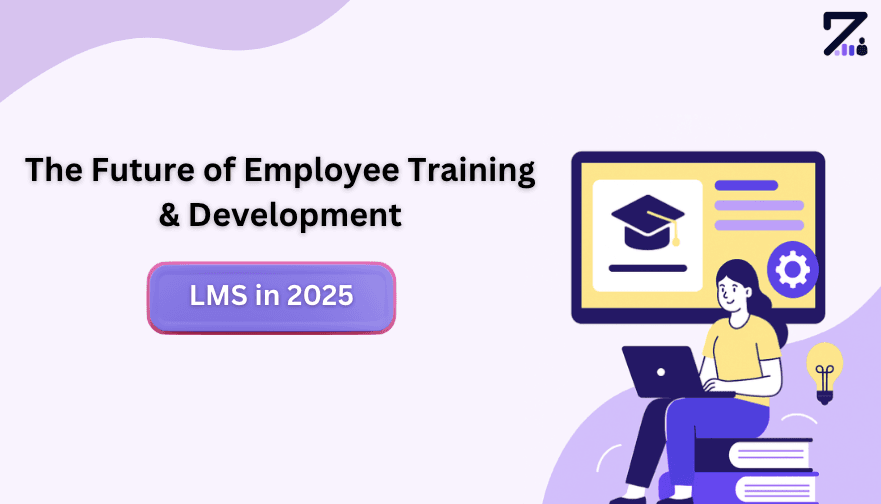
LMS in 2025 : The Future of Employee Training & Development
Introduction
It is widely accepted that when it comes to learning a skill or gaining knowledge about something, online medium is the best. As per a LinkedIn workplace training report, over 57% of L&D Departments are planning on making investment in online learning. The need for an effective way of online training is gaining importance because most of the companies are transitioning to a remote or hybrid form of work, however its benefits are not restricted to such companies only. Tools like Learning Management Systems serve as the foundation of online learning.
LMS which stands for Learning Management System, is basically a software application that is used to create and manage various online learning programs or activities. LMS first came into the educational sphere in the early 1990s, Blackboard and Moodle were some of the known LMS used back then. Most of these early LMS were simple in nature acting as a facilitation tools for various instructor-led online courses, offering basic features like pre-recorded video and written materials. It was from the early 2000s that the corporate world started adopting LMS in their research and development wing. As per reports, more than 79% of LMS users are operating outside the education industry.
In 2025, the LMS landscape is evolving with the introduction of AI. These platforms are able to automate various tasks and make the learning process more and more personalized. AI powered LMS are capable of understanding learners behaviour and preferences and create a tailored learning path for them. Apart from this concepts of gamification are making learning more engaging, with game-like elements like badges, scores and challenges. This article aims to shed light on some of the leading LMS platforms, their features and what the future holds for LMS.
What is a Learning Management System?
A Learning Management System (LMS), that is directly based on the concept of e-learning, is defined as a software application or a virtual learning environment, often used by organizations to provide a framework for designing, managing and executing different forms of educational courses or training. They are often used by the administration of these organizations to monitor the progress, evaluate the performance and ensure that the overall goals are being met. The use of LMS for delivering high quality online learning has become an essential part to corporate upskilling as well as in educational institutions. Some of the most popular LMS include Moodle, Workday, Blackboard, and Microsoft LMS.
The demand for LMS is increasing year on year with the global LMS market expected to grow by USD 79.06 billion from 2024-2028, growing at a CAGR of 27.17%. An LMS is a centralized platform, capable of managing all aspects of the learning process, starting from creating the content, its distribution, keeping track of the progress and finally giving personalized feedback. These platforms are widely used in employee training, according to reports over 94% of employees agreed that they are more likely to stay in a company which has invested in their training and learning departments. Learning Management Systems are also used for schools and other educational institutions in order to provide online courses or facilitate distance learning. This adoption was facilitated by the COVID-19 pandemic, where most of the institutes shifted to an online means of learning. They are also used to deliver compliance training to ensure employees adhere to the rules and regulations of the company. According to a study by Brandon Hall Group, companies that used LMS to deliver compliance training saw an increase of 16% in compliance rates.
A Learning Management System has three different forms of architecture namely - Cloud based LMS, SaaS LMS and On-premise LMS. When it comes to cloud based LMS they are hosted on the servers of the vendor and have to be accessed through the internet. This form of architecture has various advantages in terms of increased scalability and flexibility and reduced cost of IT, it is the responsibility of the vendor to manage and maintain the LMS. On the other hand an on-premises LMS is installed on the local server of the organization offering more control and customization to meet the unique needs of the organization, however it requires a significant upfront cost for the hardwares and softwares to be installed and managed. Finally Software as a Service (SaaS) LMS being a subset of cloud LMS provides the same service on a subscription basis. They follow a pay as you go model which allows users for predictable expenses and scalability.
Types of Learning Management Systems
Learning Management System can be of various types, some of them are mentioned below:
**Cloud-Based LMS (SaaS LMS): These are hosted on the server of the vendor and are very scalable and flexible in nature. Popular options like Cornerstone OnDemand and TalentLMS, are mostly subscription based and provide features like automatic updates, easy accessibility and enhanced data security.
****Self-Hosted/Open-Source LMS: Organizations resort to these kinds of LMS when they want it to be customized to their specific needs. LMS like Moodle and Blackboard, are popular examples of this kind of LMS. This provides users more control over their data, however the cost of installation and management is higher.
****Corporate LMS: These are specifically designed to train corporate workforces. Some of the popular LMS of this kind includes, SuccessFactors and Workday Learning, these can be used for the purpose of compliance training, onboarding new employees or even for the purpose of tracking the performance of an employee.
****Academic LMS: LMS like Blackboard, Google Classroom, and Manipal LMS are some of the popular examples of academic LMS, which are meant to deliver both synchronous and asynchronous learning to educational institutions. They help in delivering online course content and make learning more interactive for the students.
**AI-Powered & Gamification-Based LMS: There are various AI-Powered & Gamification-Based LMS that use the power of AI to create hyper-personalized learning paths for the users and provide real-time feedback. Apart from this they also use game-like elements like points, badges, and leader boards to make learning more fun and interesting. Docebo and SAP Litmos are some of the LMS offering these features.
Features & Benefits of a Learning Management System
Features:
Course creation and management: Learning management system allows organizations to create various kinds of courses. It allows them to upload various kinds of content in the form of documents, videos, etc to make sure that all the learning materials are easily accessible and the process of learning is well-structured.
Automated assessments and certifications: LMS makes it easier for the administrator by automating the process of creating and executing various assessments and quizzes. Upon completion of the course they also help in generating certificates for the candidates, saving a lot of time and manual effort.
Integration with HRMS and ERP solutions: Another feature of LMS is its ability to integrate itself with Human Resource Management Systems (HRMS) and Enterprise Resource Planning (ERP) solutions, like Workday and Oracle LMS. This helps in streamlining many administrative functions like tracking employee progress or managing the budgets.
Multi-Device Compatibility and Mobile Learning: LMS these days are designed in a way where they can be accessed from all kinds of devices including mobile phones, tablets, etc. This feature of multi-device accessibility makes modern LMS more accessible and makes it easier and convenient for the users.
In-Depth Reports and Analytics: Modern learning management systems provide detailed reports and analysis on various things like the learners progress, course completion rates, assessment scores, etc. These insights are very helpful for the organizers in assessing the quality of the program and identifying gaps and areas of improvement.
Benefits:
Reduced training costs and improved learning efficiency: Implementing a learning management system has various advantages, the primary one is the significant reduction in training cost in terms of physical elements, rents, travel, etc. According to a report by IBM, for every $ 1 spent on e-learning companies can gain $ 30 worth in productivity.
Personalized Learning Experiences with AI-Driven Recommendations: When it comes to modern LMS, they use AI to personalize learning experiences for their users. Using the data collected on the user behaviour and preferences, they provide AI driven recommendations suggesting relevant courses.
Scalability for Enterprises and Educational Institutions: These platforms are designed in a way where they can suit the scale and requirements of the organization. They are able to serve organizations of all types and sizes including small businesses, large enterprises, or educational institutions. This feature is present more in case of cloud based LMS that provides the feature of adding and removing users, courses, and features as needed. They also operate on a pay-as-you-go model thereby making it very cost effective when an organization decides to scale up their business.
Leading LMS SaaS Platforms in 2025
Best LMS for Enterprises & Large Corporations: When it comes to LMS softwares for enterprises and large corporations, some of the most popular choices are Workday Learning, SuccessFactors LMS (SAP Litmos), Cornerstone OnDemand, Oracle Learning Cloud, among others. Workday Learning, for example, acts as a unified platform for the purpose of training and development providing personalized learning, tracking progress, and integrating with various third party systems. SuccessFactors LMS on the other hand provides built-in course authoring, along with AI-powered automation, and data reporting. Along with this it also supports the option of global teams along with the feature of multilingual options, best suited for large corporations. Leveraging the power of AI, LMS platforms like Cornerstone OnDemand are curating a customized module depending on the unique tasks and career needs of the candidate.
Best LMS for Small Businesses & Startups: When it comes to a smaller company or a startup the expectations out of a LMS changes to some extent. For smaller businesses affordability and user friendliness plays an important role. TalentLMS for example provides various features at an affordable pricing, and also supports content of different formats like SCORM, xAPI, and cmi5, thereby ensuring compatibility with different e-learning standards. LearnDash (WordPress LMS) is the best choice for content creators who want to design and sell online courses. It is a plugin on WordPress with a drag-and-drop course builder. Usually smaller organizations go for cloud based LMS because of their affordability and highly scalable nature. For example, iSpring Learn which offers various unique features one of which is a course authoring tool which operates within PowerPoint.
Best LMS for Educational Institutions: The impact of the learning management system in education has been profound. Most of the educational institutions are adopting LMS in order to streamline the learning process and reduce administrative burden. Tools like Moodle, open-source and widely used, due to its features like course management, customization of learning paths, and a vast library of plugins. There are freely available LMS like Google Classroom that easily integrates itself with other Google tools like Drive, Docs and Calendar. This simplifies the process of online learning both for the student as well as the teacher.
Best Free & Open-Source LMS Platforms: These types of platforms usually allow a high degree of customization according to the needs of the client. Platforms like Moodle, Chamilo LMS, Open edX, are some of the examples of open source LMS platforms. These platforms eliminate the platform fee making them a more cost effective solution as well as reduces the dependency on the vendor giving more freedom to the organization to tweak the platform according to their pedagogical approach. They also foster collaboration and innovation as the users can help in development of the system.
Future Trends in LMS for 2025 & Beyond
LMS has become an essential part in delivering education and training in an online format. As we step into 2025, these platforms are expected to undergo significant changes, some of them are mentioned below:
AI powered LMS: The integration of AI in LMS platforms has been one of the most significant additions. In the coming future using AI these platforms are expected to offer more hyper-personalized courses according to the individuals needs. AI driven analytics can help instructors to understand where a candidate is lacking and can intervene at the right time. Also with AI adaptive assessments can be conducted depending on the proficiency of the candidate.
Microlearning & Mobile-First LMS: Microlearning is all about delivering training in smaller and easily digestible chunks so as to increase engagement and retention of the candidates. On the other hand Mobile-first LMS platforms, helps individuals to access the content of the course at any point of time and from anywhere. This helps the modern learners who have an on-the-go learning approach.
Gamification & Social Learning: Modern LMS are trying to add game-like features (like badges, leaderboards and challenges) in the online learning process in efforts of making the learning process more engaging. This feature aims to increase peer learning and foster collaboration, thereby making the learning environment more interactive.
Virtual Reality (VR) & Augmented Reality (AR) in Learning: These technologies are also changing how the learning experience is becoming more immersive and interactive. They allow the learners to practice the skills they have learnt in a realistic simulation. This can be highly effective in fields like medicine, engineering, etc.
LMS Selection Guide: How to Choose the Right LMS
As it has already been discussed, there are different types of LMS available on the market, therefore it becomes crucial for a company to carefully assess its needs before finalizing the most suitable system. Some of the points that an organization should keep in their mind are:
Industry-Specific Needs: Different industries have different needs when it comes to LMS, for example compliance-heavy industries like healthcare and finance require LMS platforms with robust compliance training features and reporting capabilities. However, when it comes to the creative sector, more importance might be given to flexibility and multimedia support.
Scalability & Customization: Open-source LMS platforms like Moodle are usually used when the organization expects extensive customization and control over the content, however it comes with a significant maintenance cost. On the other hand, when it comes to SaaS LMS platforms, they are easy to use and scalable in nature and it is the duty of the vendor to handle the updates and maintenance.
Budget Considerations: An organization is expected to analyze their budget before finalizing what type of LMS they want. There are multiple costs associated like, initial setup, licensing fees, and ongoing maintenance. SaaS LMS offers a subscription based pricing model which is more beneficial for small organizations.
Support & Security Features: Nowadays organizations are becoming more and more concerned about the security aspect of their LMS. They are looking for systems which are aligned with data protection regulations, such as GDPR, and provide data encryption to safeguard sensitive information.
Conclusion
In today's high paced world, learning management systems or LMS have become a part and parcel of every online learning or training process. These platforms or software not only streamline the training process but also encourage participants' engagement and foster continuous learning. Whether it is employee onboarding or academic lectures, these LMS solutions are capable of delivering personalized, scalable, and effective learning experiences. Most businesses nowadays are looking for opportunities to invest in the training and development process by implementing modern LMS, thereby ensuring long-term growth of the organizations. Explore these top LMS solutions today!