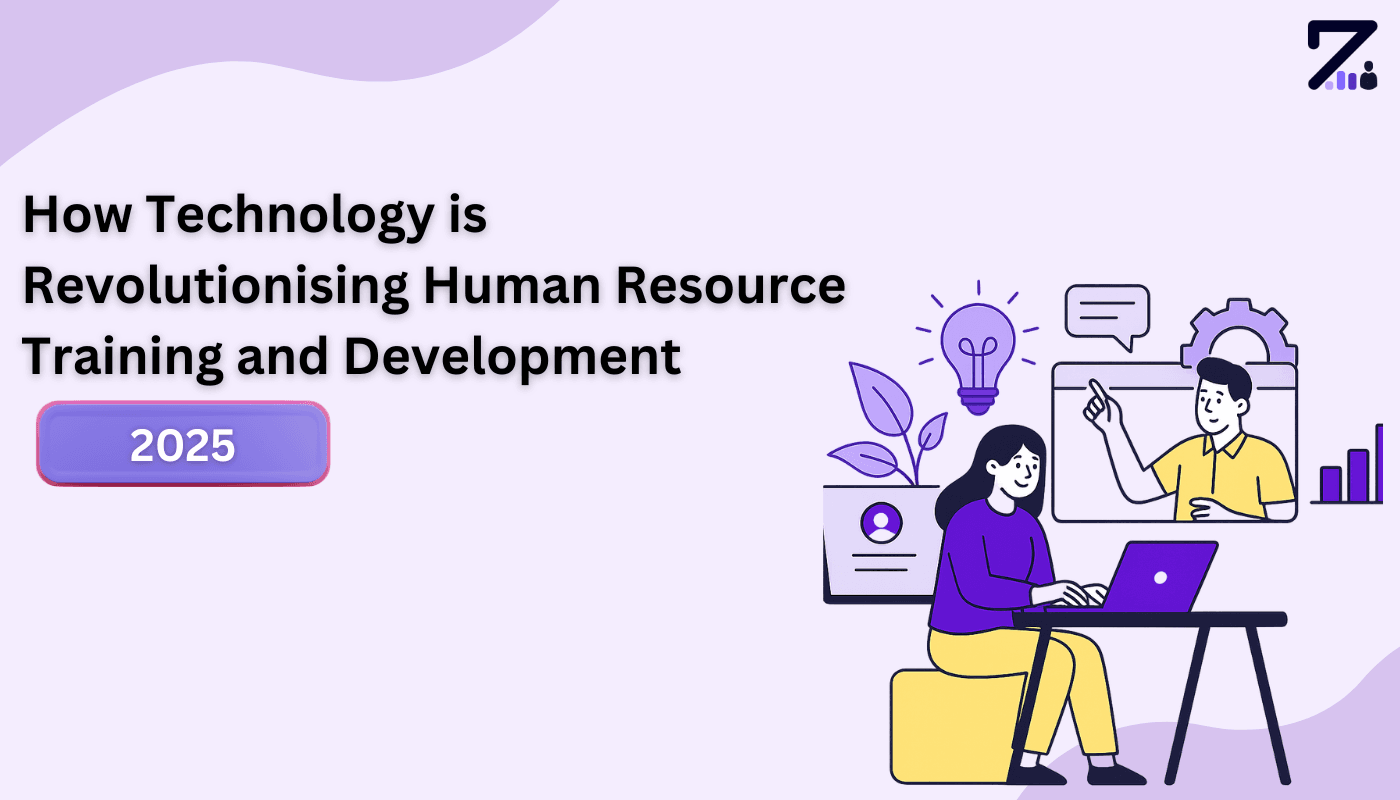
How Technology is Revolutionising Human Resource Training and Development
Introduction
A firm’s Human Resource has always been considered its most valuable asset; therefore, investing in their talent and welfare needs to be the top priority. According to LinkedIn’s Workforce learning report, more than 94% of the employees have a likelihood of staying in an organization that supports their career growth in means of upskilling them and providing necessary training. Investing in employee training and development has become a crucial part of ensuring business success. Younger employees seek development programs more than older ones. In fact, according to a survey, 27% of Gen Z and Millennial workers say that learning something new in the workplace makes them happy.
According to a study by Gallup, disengagement of the employees have been cited as one of the reasons for high employee turnover. In fact, generally the cost of replacement of talent is way higher (mostly about 150% of the employees salary) than the cost of retaining them. In order to retain the employees one of the best ways is to invest in their growth and development. It also has some other benefits some of them are mentioned below:
Enhancing Employee Performance: Employees who are trained are more equipped to perform their duties, they possess the required knowledge to carry out their duties in an effective manner. According to SurveyMonkey, 59% of employees believe that workplace training has helped them in improving their job performance.
Developing Leadership Skills: Some of the HR training programs are focused on nurturing leadership skills within employees, thereby empowering employees to be self motivated and guide teams, and make informed decisions.
Improved Organizational Culture: By investing in employee training organizations can foster a positive organizational culture where the employees feel valued. The employees are more engaged as the organization is committed to their professional and personal development
Adaptability and Innovation: In the rapidly evolving business landscape employees need to be trained in order to adapt to new technologies and methodologies.
Financial Impact: Employee training also has a positive financial impact on the organization. According to a study, organizations that invest in training experience 24% higher profit margin and are 17% more productive. This leads to increased revenue, cost savings and a more competitive business environment.
The Evolution of Employee Training and Development
When it comes to the process of training and development it has undergone some significant changes over the years, changing according to the needs and demands of the workforce. This evolution not only redefined how these processes were conducted but also introduced new challenges that the organizations needed to tackle. It was the industrial revolution that started the concept of employee training. There were a large number of untrained laborers at the factories who needed to be taught how to operate the heavy and complex machinery. While this method of instructor-led training was effective for certain types of learning, it was often time-consuming, expensive, and lacked flexibility. Another major drawback of this training was that it was mostly theoretical and abstract in nature. Then in 1954, a Harvard Professor, first introduced a “teaching machine”, which was a crude technology that allowed programmed instruction in absence of a teacher.
As computers became more and more popular, Computer based training (CBT) became the norm in the 80s and 90s. This slowly transitioned into e-learning allowing organizations to deliver these training modules in an electronic medium. This has made training more accessible and flexible in nature. In the early 2000s, the introduction of Learning Management Systems (LMS) transformed the learning process more. Today LMS offers highly personalized learning to the candidates, it also reduces a lot of administrative burdens and allows self-paced learning.
There has also been a rise in digital learning due to a shift to hybrid and remote working. Since employees are now joining in from various locations it becomes important for the organization to figure out a way to carry out the training programs to ensure continuous learning. According to a McKinsey report, 87% of employees feel that they have experienced a skill gap in the workforce due to a shift to remote work, this highlights the importance of effective digital training solutions. Through various webinars, virtual training programs and new age tools like AI powered LMS, companies are offering interactive training programs. Using AI these companies can analyze the learners behavior, automate administrative tasks, and offer real-time feedback. For more immersive experiences there are AR and VR tools that help in creating a simulation that offers the learner an opportunity to implement their learning, this can be highly effective in fields like medicine, engineering, etc.
Challenges in Employee Training & Development
There are various challenges that organizations face when it comes to successfully implementing an effective training program for employees. Even though these challenges can vary depending on the the size and type of the organization, there are some challenges which are more or less universal, they are:
Low engagement and completion rates: When it comes to corporate training programs, lack of engagement is considered one of the biggest challenges. The lack of engagement could be because the employees are unable to see any direct benefit from these programs, or are simply not finding them relevant. Employees are already busy juggling their daily responsibilities, tight schedules and completing priorities. On top of that, sitting through a training session would be an additional burden for them. These sessions become more uninteresting, when traditional methods of teaching are followed, and the instructor or the coordinator is unable to make the process interesting and interactive. For example using interactive quizzes or gamification can increase a learners engagement as compared to a worksheet or recorded lecture.
Personalization at scale: In today's day and age where the workforce is becoming more and more diversified, keeping the employees engaged in the training and development program is getting more difficult. This is a reality for companies having both on-site and remote employees. There are various barriers in terms of the geographical location, time zone or even semantic barriers in the form of the language they speak. This can be solved by providing personalized training programs for the employees. This policy is derived from the idea that one-size-fits-all training often overlooks the unique needs and requirements of the employees.
High costs and time investment: Another challenge that organizations often face is the high cost associated with delivering effective training programs. Since these programs are both expensive and time consuming it becomes difficult for small and medium sized firms to allocate necessary budgets for a comprehensive training program. Firms are expected to plan their budget effectively and strike a right balance between the quality of training and the available resources. There are cost-effective methods like outsourcing the training program to third-party vendors or simply using an online tool, instead of resorting to in person training.
Measuring effectiveness and ROI: Finally, it is also very difficult to ascertain the impact of the training and present it to the top management. In absence of a proper metric it becomes difficult to understand whether there was any positive outcome of the training or not. The presence of measurable outcomes helps in justifying the investment made. An organization can solve this by implementing a LMS, that can provide them details on - course completion rates, assessment marks, and user engagement. They can also get a sense of the effectiveness of the program by conducting surveys and collecting feedback, to get insights on the effectiveness of the training.
The Right Tools: How Technology Enhances HR Training & Development
This section aims to throw light on the various tools that organizations can utilize in order to train their employees. Some of them are mentioned below:
Learning Management System (LMS)
LMS are based on the concept of e-learning and are basically softwares that are used to create, manage and impart different kinds of online educational courses or training. They often reduce the workload of administration by automating various tasks like monitoring the progress of the students, arranging for assessments and evaluating them, and ensuring that the overall goals of the students are met. LMS has become popular both in corporate training as well as educational institutions.
Another benefit is that they easily integrate with Human Resource Management Systems (HRMS) and Enterprise Resource Planning (ERP) solutions, making it easier for the admin to keep track of all the functions. Modern LMS has also integrated AI in order to create personal learning experiences for their users, as per their needs and requirements. They also offer multi-device capabilities so that the users can access them from mobiles, tablets, etc, this makes the learning process more flexible and convenient.
AI-powered Training Platforms
As already mentioned AI helps in creating meaningful and personalized learning experiences for the users. These platforms analyze various data points like user behaviour, performance, and preferences and create a tailored learning path for them. These platforms create unique content and assessment for every individual as per their needs and follows the concept of adaptive learning. Adaptive learning is the process of using AI algorithms to customize the course material as per the needs and pace of the learner. According to research conducted, adaptive learning is known to have increased academic performance by 59% and student engagement by 36%. Assessment of this type ensures that the learner is being challenged at their skill level, which makes the learning experience more effective.
Apart from this the use of HR chatbots have also increased as they provide instant support and help in answering queries of the employees. These chatbots use natural language processing (NLP) and machine learning (ML) to answer employee queries in a human-like manner. These HR chatbots can be used to simulate conversations and provide personalized real time feedback to the learners making the process more engaging and interactive.
Gamification & Interactive Learning
Gamification involves including features of a game like, badges, leadership boards and daily tasks in the process of learning in order to make it more engaging and fun. It also incorporates various advanced tools like Augmented Reality (AR) and Virtual Reality (VR) to make the learning process more immersive.
AR is basically overlaying digital elements in the real world creating interactive and contextual learning experiences. On the other hand VR is about immersing the learners in a virtual environment, this allows them to experience realistic scenarios in the form of a simulation. For example, new employees during their orientation can be given virtual tours of their offices using VR technologies. Another example is how BMW uses VR technologies to train its employees how to efficiently set up factories and carry out lean manufacturing techniques.
Microlearning & Mobile Learning
The concept of microlearning has been gaining a lot of attention in the last few years. It basically involves delivering content in small, bite-sized forms so that it is easier for the learner to understand and retain them. Research suggests that microlearning can increase learner retention by 50% as compared to traditional methods, as they break down complex topics into small parts making it easier for learners to understand them. According to studies, the completion rate of training programs also increased to 80% when microlearning was implemented, as shorter content is easier for busy professionals to consume.
Along with this most of the employees use their mobile phone to go through the content of training programs. This is because it allows them the flexibility of doing the course/ training at any given point of time and from anywhere. Since mobile learning is allowing users to access the content on the go, even professionals can fit learning into their busy schedules. According to reports, microlearning and mobile learning are responsible for reducing training and development costs by 30% and increasing the delivery speed by 300%.
Measuring & Optimizing Training Effectiveness with AI & People Analytics
Tracking Employee Progress & Performance Metrics Using HR Analytics: An important part of HR analytics is systematic collection, analysis, and interpretation of employee data in order to make more informed decisions. Usually a company first needs to define the key performance indicators like productivity, quality of work, attendance, employee engagement, etc. Then it is the duty of these HR professionals to keep a track of these metrics and identify potential gaps. According to the 2020 Workplace Learning Report, 79% of learning and development experts are of the opinion that measuring impact should be a top priority in order to ensure effective training of employees. By leveraging these HR analytics, organizations can track the effectiveness of these programs and take data driven decisions.
AI-driven personalized learning paths: By analyzing the data with regards to employee skills, performance, and learning preference, AI algorithms can identify strengths and potential skill gaps and accordingly suggest relevant courses to the employees. A McKinsey report, highlights the importance of providing personalized learning to employees to increase productivity and retention. This is a targeted approach that aims to address the unique needs of individuals in order to provide them with better outcomes.
Integrate Training with Employee Performance Management: By integrating the training programs with employee performance management ensures that the training programs are aligned with the goals of the organization and the development needs of the employees. This integration can be achieved by linking the training initiatives with performance appraisals, and by setting clear learning objectives, and ensuring a regular evaluation of progress.
Future Trends in Human Resource Training & Development
The world of training and development is extremely dynamic in nature, with new challenges coming up, it is the duty of HR professionals to think of new innovative ways to address these challenges. For example the use of AI-driven Coaching & Mentorship Programs is becoming very popular these days. As previously mentioned in the article they aim to provide customized learning paths to serve the individual needs of the employees. Another noticeable trend is the increased focus on continuous learning and autonomy, which encourages self-directed learning and allows the users to choose their learning path and the pace at which they want to do the training. This along with microlearning allows learners to focus on skills and knowledge that would be most beneficial or important to them, thereby increasing retention.
Technologies like blockchain are also helping in ensuring the authenticity and integrity of certifications and qualifications earned by the learners. This reduces the chances of any fraud and makes it very simple for the employers to verify these credentials. AR/VR technologies are expected to provide more practical and realistic training experiences that are difficult to be replicated in the real world. Using these technologies one can recreate the most complex situations, so that the employees can be trained on the protocols or the best ways to deal with it.
Conclusion
The future of human resource training and development would be shaped by technology and various integrated strategies. As we move into 2025, organizations need to come up with unique strategies to foster continuous learning and development of the right skills for the employees. By adopting various forms of technologies like LMS, AI powered training platforms, gamification and various strategies like microlearning, or self-directed learning, organizations can ensure more effective training programs. HR teams across the world are on the lookout to adopt the right tools and strategies in order to make sure their companies can create resilient teams that are aligned with the strategic goals of their organizations.