Hiring Process Guide 2024 | Key Trends and Technologies
Introduction
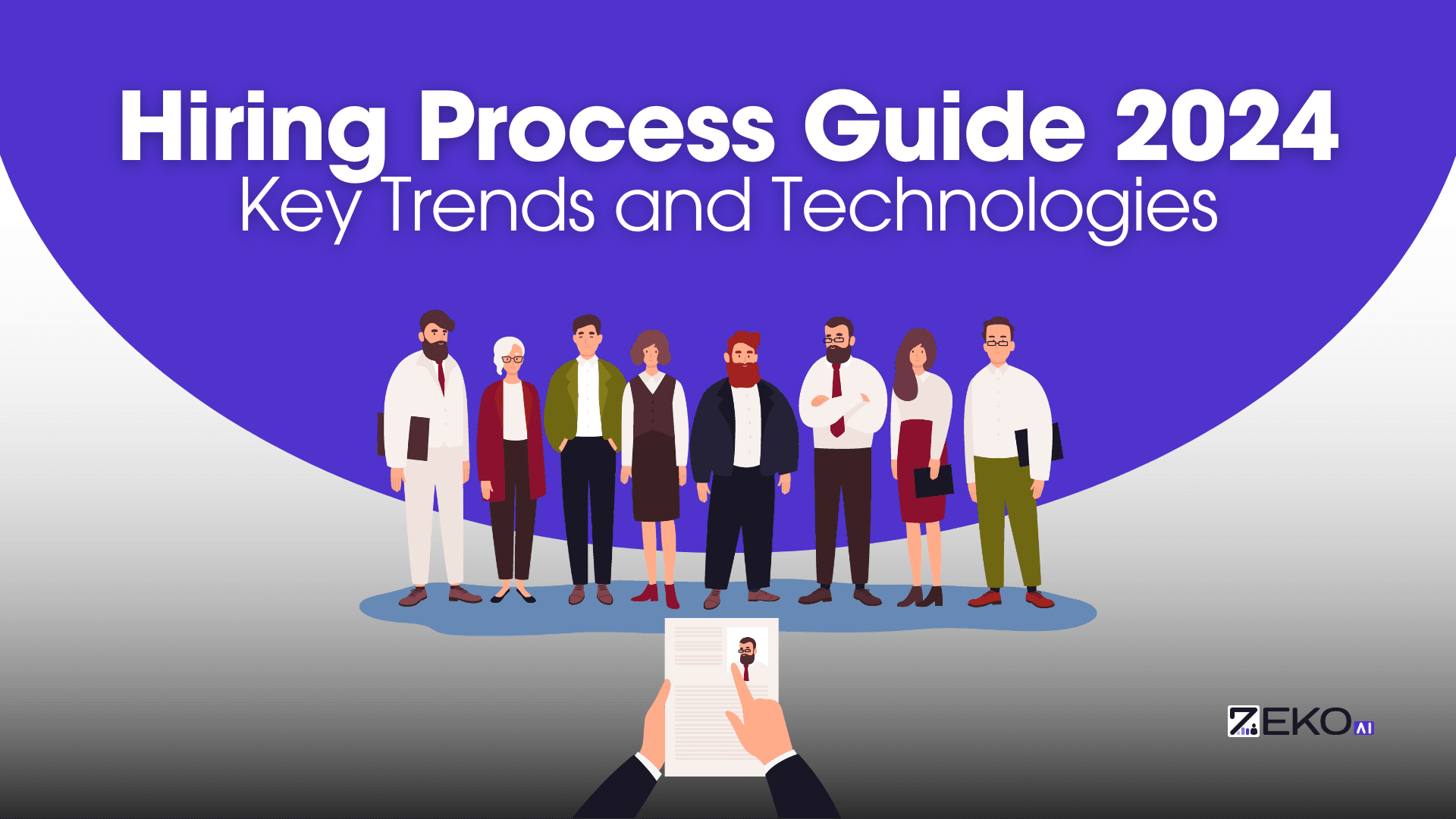
A hiring process consists of multiple steps, each intended to guarantee that the best applicant is chosen for the position. The steps involved in this process usually include job analysis, candidate sourcing, application screening, interviews, and onboarding.Over time, the hiring process has changed dramatically to accommodate advancements in technology as well as shifts in candidate expectations and organizational requirements. The recruitment process is getting more complex as companies try to draw in top talent in a crowded labor market.
This blog explores the state of hiring today, focusing on major developments and emerging technologies that will influence recruitment in the years to come. We'll look at new technologies that are changing the face of human resource management and how industry leaders like Google, Amazon, and Wipro are rethinking their hiring practices.
Recruitment Process Lifecycle: Comprehensive Breakdown with Latest Trends and Statistical References
The recruitment process is a step-by-step framework aimed at attracting, evaluating, and onboarding the right candidates efficiently. Each stage ensures the selection of the most suitable candidate, meeting both the organization's needs and the applicant's career goals. Here's a breakdown of the recruitment process lifecycle, supported by statistics and insights.
1. Job Analysis
Job analysis is the foundation of the recruitment process, focusing on analyzing the role to determine its responsibilities and requirements.
Key Steps:
Determining Needs: Evaluating team structures and workload to decide whether a new role is needed.
Identifying Role Conditions: Drafting a comprehensive job description that includes duties, qualifications, and KPIs.
Job Specification: Outlining the qualifications, experience, and skills required to succeed.
Trend to notice:
2. Sourcing
Sourcing involves identifying and attracting potential candidates through various channels.
Key Strategies:
Job Boards: Platforms like Indeed and niche job boards are used to post job listings.
Social Media: Leveraging platforms like LinkedIn, Facebook, and Twitter to attract active and passive candidates.
Employment Agencies: Collaborating with recruitment agencies to tap into a larger talent pool.
Employee Referrals: encouraging current employees to refer qualified candidates.
Stats:
91% of employers currently use social media as part of their hiring process.
82% of employees rate employee referrals above all other sourcing options to yield the best ROI
3. Screening
Screening is the initial filtering process where applications are reviewed to shortlist candidates based on job criteria.
Key Steps:
Resume Screening: Manually or via automated tools like Zeko Screen to filter qualified candidates.
Application Forms: Evaluating responses to assess suitability.
Pre-screening Assessments: Online tests to assess skills, personality, and qualifications.
Trend to notice::
63% of recruiters say they like to see resumes personalized to the job position. ( Glassdoor, 2023)
41% of recruiters look for skills on a resume first. ( Mckinsey, 2023)
Over 80% of resumes don’t make it past the first screening and only 1 in 10 get to a hiring manager. (Workopolis)
91% of recruiters love seeing soft skills on resumes. ( Glassdoor, 2023)
4. Interviewing
Interviews assess candidates through face-to-face or virtual interactions, focusing on both technical and behavioral aspects.
Types of Interviews:
Initial HR Interviews: For cultural fit and general suitability.
Technical Interviews: To assess specific job-related skills.
Behavioral Interviews: Evaluating past behaviors to predict future success.
Panel Interviews: Cross-departmental interviews for comprehensive candidate assessment.
The success rate of job interviews is 20%, meaning that only 1 in 5 candidates are offered a job after an interview.
The most common job interview question is “Tell me about yourself,” with 93% of hiring managers asking this question.
5. Selection
This stage involves choosing the best candidate and making an offer.
Key Steps:
Candidate Assessment: Reviewing interview results and evaluations to make a final decision.
Offer Making: Extending a formal job offer with details on salary, benefits, and start date.
Background Checks: Verifying the candidate's employment history and credentials.
Trend to notice:
6. Onboarding
Onboarding integrates the new hire into the organization, ensuring a smooth transition.
Key Steps:
Orientation: Introducing new employees to company culture, policies, and procedures.
Training: Role-specific training to equip new hires with the necessary skills.
Integration: Assigning mentors and ensuring the new hire feels welcome within the team.
2024 Statistics:
60% of employers do not set any milestones or goals for new employees.
69% of employees who have an exceptional onboarding experience are likely to stick around for at least 3 years.
20% of employees quit within the first 45 days of employment.
Latest Trends of Popular Companies
Google’s hiring process is renowned for its rigor and emphasis on finding candidates who align with the company’s culture and values. Google also incorporates innovative techniques such as structured behavioral interviews and case studies to evaluate candidates.
By employing AI-driven technologies to lessen bias in the employment process, Google has increased its focus on diversity and inclusion in 2024. Additionally, there's a growing focus on the flexibility of remote work; Google is actively looking for applicants who are strong at working virtually. Their structured behavioral interviews are still important, but now they also emphasize creativity and adaptation in a mixed workplace.
Google uses AI tools to screen candidates and enhance diversity, contributing to 20% improved hiring efficiency (Forbes, 2023).
Amazon
Amazon’s hiring process is designed to identify candidates who embody its leadership principles and technical expertise. standards.
The hiring patterns of Amazon in 2024 are centered on its leadership values, particularly in times of economic turmoil. The organization has implemented virtual reality (VR) simulations to evaluate candidates' decision-making skills under duress and increased its usage of AI to expedite the initial screening process. Hiring for positions supporting AI-driven logistics and sustainability efforts is highly encouraged.
On the tech-side Amazon uses VR simulations and AI in initial screenings to assess decision-making under pressure.
60% of Amazon's initial candidate screening is done through AI systems (Business Insider, 2024)
Wipro
In an effort to draw in top talent, Wipro has started using gamified tests and is making greater use of digital channels for university recruitment. Wipro's hiring procedure in 2024 has a strong emphasis on upskilling applicants in AI and cloud computing, which reflects the company's move towards services for digital transformation. In order to ensure seamless integration, virtual onboarding has evolved into a more complex process that incorporates AI-driven learning modules.
Wipro also employs gamified tests and digital channels for university recruitment, with a focus on upskilling candidates in AI and cloud computing. Gamified assessments lead to 30% higher candidate engagement at Wipro (ET HRWorld, 2024).
Zomato
The main goal of Zomato's hiring plan for 2024 is to find innovative people that can spur advancements in the food tech industry. Candidates with experience in data science, AI, and customer experience management are the ones the organization is most interested in employing. Additionally, Zomato is improving its remote work alternatives, emphasizing them in their recruitment pitch to draw in top talent from around the world.
Zomato's shift to remote work recruitment increased their talent pool by 40% globally (HRTech, 2024).
Zoho
In addition to putting more of an emphasis on hiring for remote and hybrid positions, Zoho's hiring trends for 2024 include internal mobility and referral programs. Candidates with experience in open-source technologies and product development are still highly valued by the company as it grows its portfolio of enterprise software solutions. AI-powered skills evaluations are another feature Zoho is using to speed up the hiring process.
Cognizant (2024)
The employment patterns of Cognizant in 2024 show that digital skills and artificial intelligence (AI) are highly valued, especially in cloud computing and cybersecurity. The business has automated the preliminary steps of hiring through the use of AI-powered platforms, increasing the effectiveness of the procedure. These days, remote work is a normal offering, and Cognizant is looking for people who can succeed in a distributed, global workforce.
Capgemini (2024)
Capgemini is concentrating on data-driven recruitment tactics in 2024, using sophisticated analytics to find the best applicants for positions in sustainability, cloud computing, and artificial intelligence. To better analyze technical and soft abilities, the organization is also incorporating virtual reality (VR) into its assessment centers. Capgemini's onboarding procedure has gone more digital, with a focus on lifelong learning and growth from the start.
FedEx
FedEx’s 2024 hiring trends emphasize operational efficiency and sustainability. The company is focusing on hiring candidates with skills in logistics technology and data analytics, crucial for optimizing supply chains. Virtual recruitment and AI-driven assessments are being used extensively to expedite the hiring process, particularly for remote and hybrid roles.
Starbucks
Starbucks' employment practices for 2024 will prioritize sustainability and diversity. Candidates having a background in sustainability and customer experience management are given preference by the organization. Starbucks is investing in thorough onboarding programs that highlight company culture and values, and it is also using digital technologies to enhance the recruitment experience.
Infosys
Infosys is stepping up its digital recruitment efforts, identifying people with strong technical backgrounds—especially in AI, cloud, and cybersecurity—using AI and machine learning. The organization is putting more of an emphasis on diversity and inclusion in 2024 and making specific efforts to hire more women for tech-related positions. In order to draw in new talent from prestigious universities, Infosys is also growing its virtual internship programmes.
YouTube
YouTube's hiring trends continue to evolve, reflecting the changing landscape of the digital media industry. While AI remains a key focus, the company is also seeking individuals with expertise in data science, product management, and content strategy.
YouTube has also shifted its interview process to prioritize work sample tests and structured interview questions over brain teasers, aligning with a more practical and job-relevant assessment approach. This change reflects YouTube's commitment to hiring candidates who can effectively contribute to their team's goals and objectives.
Latest Hiring Technologies
AI and Automation
AI and automation are revolutionizing how companies hire, making processes faster and more efficient. Tools like Zeko can simplify hiring by handling repetitive tasks:
Automated Screening: Instead of manually reviewing hundreds of resumes, Zeko Screen analysis and ranks candidates in seconds, ensuring recruiters focus only on the best fits.
Chatbots: AI-powered chatbots guide candidates through the early stages of the hiring process, answering common questions and keeping the communication flowing.
Video Interviewing Platforms
Video interviews are a staple for remote hiring, and advanced platforms like Zeko Interview make the process even smoother:
AI-Driven Live Interviews: With Zeko’s AI, Avya, interviews become more interactive and adaptive. Avya reviews resumes and adjusts questions in real-time based on candidate responses. It also analyzes answers for technical expertise, fluency, and overall fit, helping recruiters find the right candidates faster.
Asynchronous Interviews: Candidates record responses to pre-set questions, allowing flexibility in scheduling.
Live Video Interviews: Real-time interactions with interviewers, enhancing the evaluation process.
Recruitment Management Systems
Modern Applicant Tracking Systems (ATS) play a vital role in managing the entire hiring process:
Tracking Candidates: ATS platforms help you monitor candidates’ progress throughout the recruitment journey, making collaboration easier between HR teams and hiring managers.
Centralized Data: They store resumes, interview notes, and feedback in one place, ensuring all the necessary information is accessible to everyone involved in the decision-making process.
Candidate Relationship Management Tools
Building strong relationships with potential hires is crucial in today's competitive job market. Candidate Relationship Management (CRM) tools help companies stay connected with candidates throughout the hiring process and even beyond. These tools simplify communication, making it easier to send personalized messages, provide updates, and keep candidates engaged.
It's not just about filling a position; it's about creating a positive experience for every applicant, showing them that they are valued. CRM tools also allow recruiters to track interactions, set reminders for follow-ups, and maintain a talent pool for future opportunities. By nurturing these relationships, companies can build a community of potential hires who feel connected and informed, leading to better hires and a stronger employer brand.
Predictive Analytics in Hiring
In today's data-driven world, hr analytics has become a game-changer in the hiring process. Rather than relying solely on intuition, recruiters can now use data to make more informed decisions. Analytics provides insights into every stage of hiring, from identifying the most effective job boards to understanding which interview questions best predict a candidate's success.
By analyzing metrics like time-to-hire, cost-per-hire, and candidate drop-off rates, companies can streamline their recruitment strategies, reducing inefficiencies and improving the overall process. Analytics also helps uncover patterns, such as the traits of top performers or the most common reasons candidates decline offers, enabling businesses to refine their approach continuously. This use of data not only improves hiring outcomes but also helps create a more fair and unbiased process by focusing on objective performance indicators rather than gut feelings.
Onboarding Solutions
Once you’ve hired the best talent, the next step is ensuring a smooth transition into the company. Automated onboarding tools guide new hires through their first days, helping them complete paperwork, attend training, and get acquainted with their teams—ensuring they settle in quickly and effectively.
By using tools like Zeko Hunt, Zeko Analyze, and Zeko Interview, companies can streamline everything from candidate sourcing to interviews. Along with other technologies like ATS platforms and onboarding solutions, the hiring process becomes more efficient and enjoyable for both recruiters and candidates.
FAQs
What is the recruitment process lifecycle?
The recruitment process lifecycle includes job analysis, sourcing, screening, interviewing, selection, and onboarding.
How does the hiring process at Google differ from other companies?
Google’s process emphasizes problem-solving skills and cultural fit, with multiple rounds of interviews and case studies.
What are the latest technologies in recruitment?
Recent technologies include AI-driven tools for automated screening, video interviewing platforms, and integrated recruitment management systems.
How can AI improve the hiring process?
AI can enhance the hiring process by automating repetitive tasks, providing predictive analytics, and improving candidate matching through advanced algorithms.
What is a recruitment flowchart?
A recruitment flowchart visually represents the steps involved in the hiring process, helping organizations streamline their procedures and ensure consistency.
What is the importance of employer branding in recruitment?
Employer branding attracts top talent by creating a positive perception of the company, making it easier to attract and retain high-quality candidates.
How do employee referrals impact the recruitment process?
Employee referrals often lead to higher-quality hires, quicker placements, and improved retention rates, as referred candidates are typically more familiar with the company culture.
What are the best practices for conducting interviews?
Best practices include preparing structured questions, focusing on both technical and behavioral aspects, and ensuring a consistent evaluation process across all candidates.
What is the role of diversity and inclusion in recruitment?
Diversity and inclusion ensure a broad talent pool, fostering innovation and creativity by bringing different perspectives and experiences into the organization.
How does onboarding influence employee retention?
Effective onboarding helps new hires adjust quickly, boosting job satisfaction and engagement, which ultimately leads to higher retention rates.
Conclusion
The hiring process is rapidly evolving, driven by advancements in technology and shifting organizational needs. Companies like Google, Amazon, and Wipro are leading the way with innovative hiring practices that emphasize cultural fit, technical expertise, and data-driven decision-making. As we move forward, technologies such as AI, video interviewing, and advanced recruitment management systems will continue to transform how organizations attract and select talent. By staying abreast of these trends and leveraging new tools, companies can enhance their recruitment strategies and secure top talent in an increasingly competitive job market.
Zeko.Ai is leading this change by using state-of-the-art AI technology to make hiring more efficient and ensuring that businesses are able to identify the best personnel. Through the integration of AI-powered evaluations, video interviewing features, and data analytics, Zeko.Ai assists businesses in finding individuals who not only possess the necessary skills but also fit in with their corporate culture. Zeko.Ai is dedicated to enabling businesses to maintain their competitiveness in the ever-evolving recruiting marketplace by implementing creative recruitment tactics that draw in and hold on to top talent.